When Landscape Becomes Memory
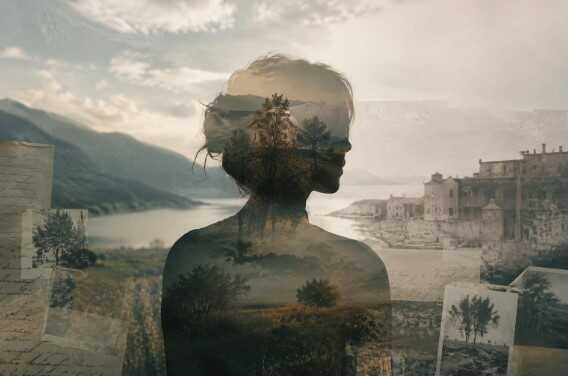
There are places we remember without being able to describe them precisely.
A road taken every summer. A field seen from a train window. The particular light that fell across a garden in the late afternoon. A shoreline, a forest, a house that no longer looks quite the way it did.
Memory rarely preserves a landscape exactly. It changes it. Some details disappear while others become strangely vivid. A colour may remain long after the shape of a building has been forgotten. A certain horizon can return with surprising clarity, even when we can no longer remember when we first saw it.
This is one reason landscape in contemporary art can feel so personal. Artists are not always interested in recording what a place looks like. Landscape can also be a way of exploring what a place leaves behind.
Beyond the Landscape
For centuries, artists have painted mountains, fields, rivers, gardens and coastlines. Landscape has served as documentation, symbolism and a way of understanding the relationship between people and the natural world.
Contemporary artists often approach the subject differently.
A landscape does not have to be recognisable to feel familiar. It can be fragmented, abstracted, partially erased or reduced to a few colours and gestures. What matters is not geographical accuracy, but the atmosphere of a place and the experiences attached to it.
The view itself is only part of the story. What stays with us may be a mood, a sensation or a detail that has become detached from the original setting.
The 2026 exhibition Human Nature: Contemporary Visions of Landscape, Memory, and Place brings together contemporary works that consider how nature, identity and lived experience shape the way landscape is seen and remembered.
A Place Is Never Just a Place
Think about somewhere you have known for years.
Perhaps it is a childhood home, a street near your first school, a holiday destination or a park you used to visit often. If you returned today, you might notice that the place itself has changed. Buildings may have disappeared. Trees may have grown. A familiar path may have been replaced.
And yet something can remain.
It is not necessarily physical. It may simply be the accumulated feeling of having been there.
An artist can use a particular location as the starting point for thinking about belonging, absence, childhood, migration or loss. The landscape can hold those experiences even when there is no literal archive.
Kunsthalle Düsseldorf’s 2026 project Ecologies in Motion offers a useful example. Held in the 2.5-hectare Malkastenpark, the project treats the park as an active part of the exhibition rather than a neutral backdrop. Sculptures, performances and interventions engage with its history, ecology and patterns of use, while the park itself becomes part of the artistic reflection.
The setting therefore matters. Its trees, structures, history and changing uses are not simply background information; they affect how the works are encountered.
The Landscape We Carry With Us
Memory is selective. It does not preserve everything equally.
This is particularly visible in Elena Damiani’s Fading Field No. 1, held by The Museum of Modern Art. Made in 2012, the work is an inkjet print on translucent silk chiffon. It combines found landscape photographs, including a mountain image from the early twentieth century and a view of Yosemite. Because the fabric changes with light and the viewer’s position, the landscape can appear more visible from one angle and less distinct from another.
Damiani describes the landscape in the work as something that begins to vanish, almost like a memory or recollection. The physical construction makes that idea tangible. The image is there, but it never feels completely fixed.
The work also points to the histories carried by landscape images. Damiani connects landscape representation with territory, belonging, ownership and collective memory. A landscape photograph can therefore contain more than a record of scenery. It can bring older histories into the present.
Nature as an Emotional Landscape
There is another reason landscape remains compelling in contemporary art: nature can express feelings that are difficult to put into words.
A dark sky can suggest uncertainty. An empty field can evoke loneliness. A garden can carry associations of childhood, care or family. Water can suggest movement, distance or change.
These meanings are never fixed. The same river can represent freedom to one person and loss to another.
Contemporary landscape art often leaves room for that difference. Instead of explaining exactly what a place means, an artist can create an atmosphere in which viewers begin remembering places of their own.
A painting of trees does not have to remind everyone of the same forest. It may simply bring another one to mind.
When a Landscape Changes
Places change, and sometimes they disappear entirely.
A building is demolished. A field becomes a development. A coastline is altered. A familiar neighbourhood becomes difficult to recognise. Even natural environments that seem permanent can shift over time.
Art can become a way of noticing those changes.
Ecologies in Motion does this by placing contemporary art directly within Malkastenpark and drawing attention to the park as a social, ecological and aesthetic space. Its history is part of the project, from its earlier garden forms to its present role as an urban environment. The exhibition also considers biodiversity, old trees, historical structures and the ways people use the park.
A different approach appears in Amina Kadous’s Memory Is a Place. The Cairo-based artist examines how memories become intertwined with places and objects. As part of the two-part project, the ARD Art Institute in Cairo will present One Brick at a Time from November 1 to December 31, 2026. Photographs attached to bricks from various buildings document the decay and renewal of Cairo.
The materials are ordinary, but they connect architecture with personal recollection and the changing history of a city.
The Personal and the Collective
Memory can be intimate, but it can also belong to a larger community.
A landscape can hold traces of migration, conflict, industry, displacement or cultural history. A river can mark a border. A house can carry generations of family stories. A public square can become associated with an event that changes how an entire community remembers a place.
This makes landscape particularly useful within contemporary art.
An artist may begin with a private memory and arrive at a larger question: whose history is visible in a place, and what happens when the physical landscape changes but the memories connected to it remain?
Kadous’s project brings these two scales together. Memory Is a Place connects personal memories with Cairo’s collective history, while her work with urban structures and intimate spaces develops the idea of what she calls “architectural memory.”
Places can function as informal archives. They preserve traces that may never appear in official histories.
Looking at Places Differently
Perhaps the most interesting thing about landscape and memory is that neither requires a perfect image.
A place can survive in a colour, a fragment of architecture, a sound or the suggestion of a horizon. Sometimes an artwork does not show us a place at all. Instead, it recreates something about the experience of having once stood there.
That is one reason contemporary landscape can feel so different from a traditional scenic painting.
It is less concerned with saying, “This is what the place looked like.”
Instead, it can ask what the place meant, what happened there and what remains after we leave.
Those questions give landscape a wider role in contemporary art. It can become a way of thinking about belonging, change, absence and the passage of time without reducing any of them to a single explanation.
The Places That Stay
We often think of memory as something that exists inside us. But it is also tied to the world around us.
Memory can attach itself to objects, buildings, gardens and landscapes. A familiar view can bring back a period of life that seemed forgotten. A changed street can make the past suddenly feel close.
This may be why landscape continues to matter in contemporary art. It gives artists a way to work with experiences that are difficult to preserve in any other form.
The most memorable landscapes in art are not necessarily the most beautiful ones. They may be the ones that make us notice something we had stopped thinking about: a place, a feeling, a relationship to the world.
Sometimes we look at a landscape and recognise, in it, a place from our own past.